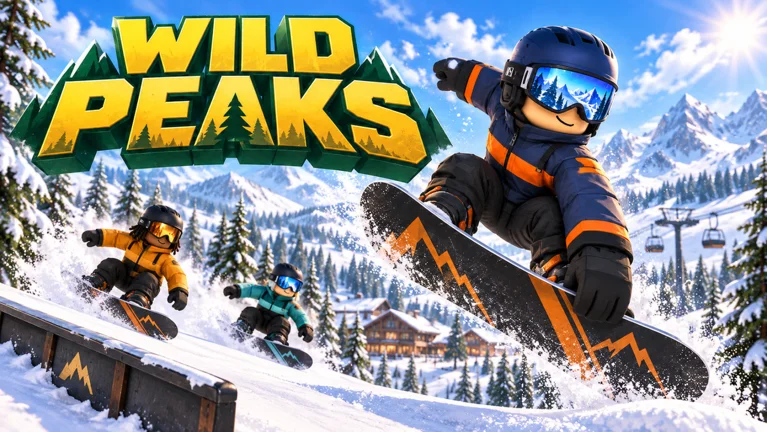
Snowboarding is a useful example of a game that teaches through movement. Players can understand the fantasy quickly, but steering, landing, and linking tricks still need explanation. A long instruction screen separates them from the activity they came to try. A good introduction gives the player enough control to enjoy the first descent, then adds decisions as the terrain becomes more interesting.
Wild Peaks includes a tutorial, Pinecrest, Big Air, combos, riders, and challenges in its project description. The following guide examines how those kinds of elements can fit an onboarding sequence. It proposes design methods rather than documenting the game’s exact tutorial or an optimal scoring strategy.
Define the first successful ride
Choose a small achievement that proves the player understands the essential interaction. It might be reaching a visible finish while making a few controlled turns. The achievement should require meaningful input, yet leave room for imperfect execution. A first ride that demands a complete trick chain is teaching too many things at once.
Write down what the player must understand to reach that finish. Steering, recognizing the route, and recovering after an error may belong on the list. Rider selection, cosmetics, and advanced challenges probably do not. Those can become reasons to return after the first useful experience.
Keep success visible. A recognizable destination and immediate finish feedback help players connect their input with progress. If the first route loops into another area without an obvious end, someone may complete the lesson without realizing it. The introduction should establish a dependable relationship between an action, a result, and the next opportunity.
Let terrain explain the next control
A wide bend can teach steering better than a paragraph because its shape presents a reason to turn. A gentle rise can introduce airtime before a larger jump. Place these situations in an order that lets the player use one skill before combining it with another.
Use sightlines deliberately. A player should see enough of the approach to prepare for the action. A jump hidden immediately behind a corner teaches surprise more than landing. Surprise can be useful later, once the controls are familiar, but early terrain should make the relationship between input and outcome easy to observe.
Roblox’s onboarding guidance emphasizes introducing essentials and reaching enjoyable gameplay quickly. Applied to a downhill game, that suggests putting useful instruction near the movement situation instead of presenting every control in advance. The terrain and prompt should explain the same action rather than competing for attention.
Keep prompts short and timed to the action
A prompt is most useful when the player can immediately do what it describes. Showing a landing instruction at the starting line asks them to remember it until later. Showing it after a missed landing may help the next attempt, but can leave the first failure unexplained. Find a point on the approach where there is enough time to read and act.
Use language that names the action and its purpose. “Steer toward the open slope” is clearer than a vague encouragement. When controls vary by device, show the relevant input rather than a desktop-only symbol that mobile players cannot use.
Limit competing messages. A combo notification can wait while a first jump prompt is active. After the player completes the action, remove or simplify the prompt. Repeated full instructions can make mastery feel invisible. Mobile touch control design explains why readable prompts also need to account for fingers covering part of the display.
Teach recovery as a normal skill
A new player will make mistakes. Decide what the introduction should teach about those mistakes. If every error returns them to the beginning, much of their session may repeat an already learned segment. A nearby recovery point allows more practice on the skill that actually needs attention.
Show how to regain direction, rejoin the route, or attempt the jump again. The recovery can be part of the terrain, not merely a button. A lower path or a clear return area gives the error a consequence while preserving momentum.
Compare the time spent riding with the time spent waiting after an error. You do not need an arbitrary universal ratio; you need to see whether the current sequence lets the player learn. If someone spends several attempts walking back to a short jump, shorten the recovery journey before adding more tutorial text. A useful retry often teaches faster than another instruction panel.
Introduce combos after individual actions work
A combo system adds value when players can already recognize the actions being combined. First let them see the result of one trick or maneuver. Then show how another action connects to it. The feedback should explain the relationship without making the player study a calculation while moving downhill.
Separate recognition from optimization. A newcomer needs to understand that a sequence is building. An experienced player may care about precise timing and the strongest route. Both can use the same system, but the initial explanation should focus on the first level of understanding.
Give a safe practice area enough room for another attempt. The player should be able to change one part of the sequence and see the difference. Replayability without content bloat explores how mastery creates reasons to revisit a familiar space. A well-taught combo system can support that depth without requiring a new mountain for every session.
Turn challenges into invitations
Challenges can guide players toward skills they have not tried. Make the requested activity concrete and the completion state easy to recognize. A challenge that asks for an advanced chain before explaining the component actions can feel like a blocked checklist rather than an invitation.
Sequence challenges by dependency instead of simply making numbers larger. One can encourage using a different route; another can ask for a controlled landing; a later challenge can combine both. This progression helps players see why the skill matters outside the tutorial.
Rider or collection systems can provide an additional goal, but should not obscure the connection between improvement and play. Keep the next accessible challenge visible. If a player returns after a break, a short reminder of what they were learning is more useful than a screen full of unexplained rewards. Progression should help them choose a ride, not delay starting one.
Observe the lesson from the player’s perspective
Watch a new player complete the introduction without coaching. Note where they look, which prompt they notice, and what they try after a mistake. If they steer correctly but miss the route, the issue may be a landmark. If they see the jump but cannot connect the input to the landing, the control explanation may need work.
Ask afterward what they would practice next. Their answer indicates whether the introduction revealed a useful future goal. Actionable playtest feedback helps distinguish a missing explanation from a preference about difficulty. Keep a record of the exact moment that caused confusion so the revision has a clear purpose.
Test again after changing that moment. An effective introduction leaves players with a successful ride, a way to recover, and a reason to improve. It does not need to prove that they understand every system. The goal is to make the next descent feel like a choice they can enjoy rather than another lesson they must complete before the game begins.
Check the second visit
On a return visit, the player should be able to begin riding without repeating every introductory explanation. Keep a route to practice for someone who wants it, but make the current goal clear for someone ready to continue.
This distinguishes teaching from gating. A tutorial supports access to the activity; it should not become an unnecessary obstacle after the skill is understood. The return test also reveals whether the challenge structure provides a useful next decision beyond simply repeating the first descent.