A mystery fishing game asks players to do more than repeat a cast. It can turn a familiar activity into an investigation: what lives here, why does it behave strangely, and what will the next discovery change? Progression supports mystery when it provides questions and decisions. It becomes weaker when every system competes for attention before the player understands the lake.
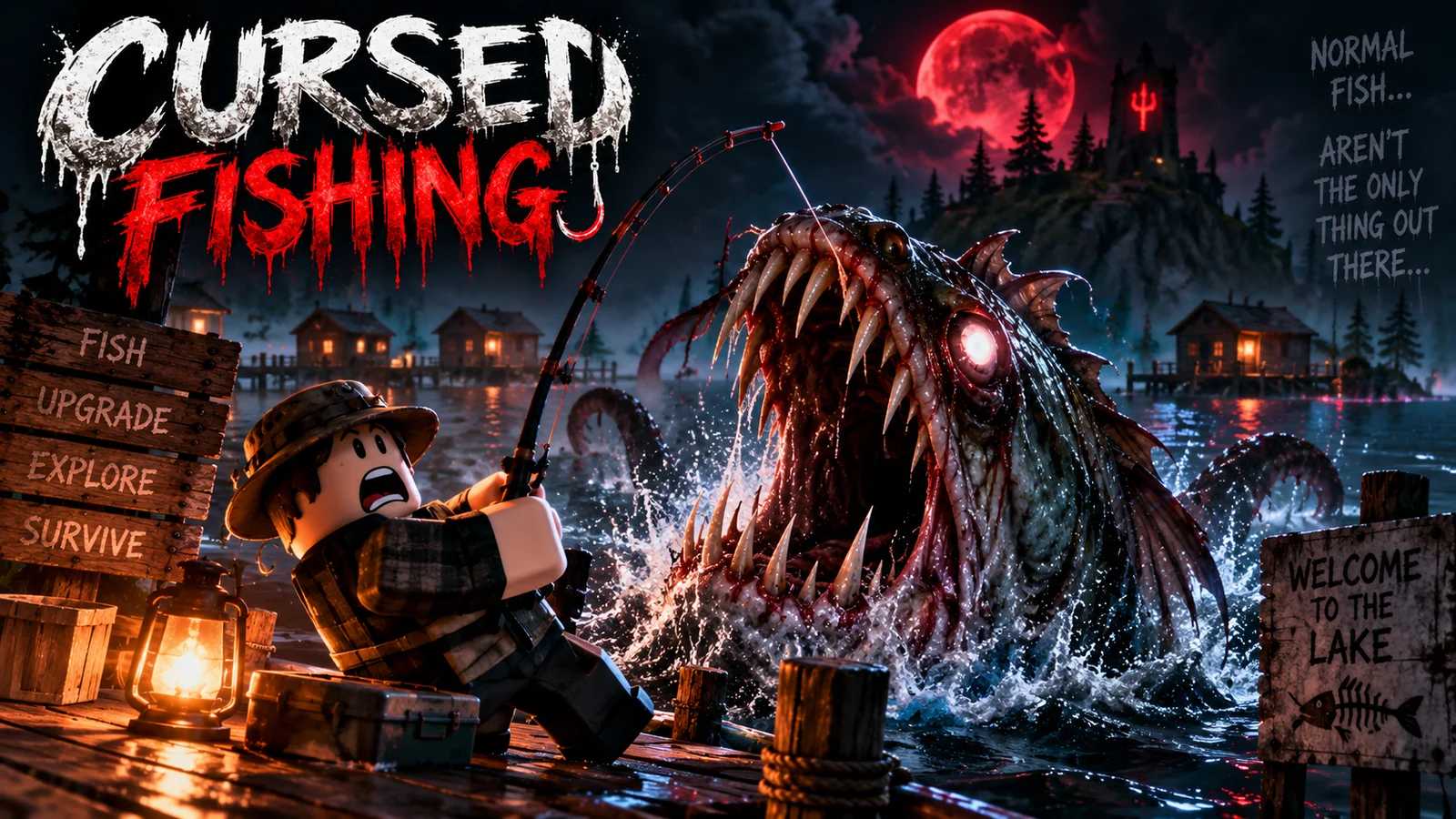
Cursed Fishing is a Dinks Gaming reference. Its described features include mutated species, a shack and aquarium, research, cursed contracts, and shared lake events. This guide uses those publicly presented ideas to discuss progression design. It does not provide an undocumented walkthrough or claim particular catch probabilities.
Keep the cast understandable
The first cast should establish what the player controls, what feedback matters, and how an outcome appears. Mystery can surround the creature or location while the interaction remains clear. A player who cannot tell whether a cast registered is dealing with interface uncertainty rather than an intriguing world.
Choose an early result that explains the sequence. Show the transition from action to anticipation to discovery. If the catch introduces a collection or research system, provide an obvious next step without opening several unrelated screens. A short path from the first catch to its meaning helps the world feel connected.
Watch attention during this sequence. A reward notification, an event announcement, and a tutorial message can each be reasonable alone while confusing together. Prioritize the information needed for the current action. The broader lesson in game onboarding applies here: teach the next useful decision before explaining every available system.
Make discoveries ask better questions
A collection is more compelling when each discovery suggests a possibility. A strange marking might point toward another area. Unusual behavior might make the player reconsider when to fish. These are hypothetical patterns, not stated mechanics of Cursed Fishing. Their purpose is to connect a catch to something the player can investigate.
Avoid making every clue an obscure riddle. Some discoveries should provide direct progress so players know attention is rewarded. Others can leave an unresolved question. The mixture gives newcomers structure while leaving room for discussion and repeated exploration. A clue that remains mysterious should still be identifiable as something worth remembering.
Write the intended question for each important discovery. “What else appears near this location?” is more productive than “This fish is rare.” Rarity creates excitement, but a rare object without a relationship to the world may not support mystery. A useful discovery changes what players notice, where they go, or what they pursue next.
Give collections a visible purpose
An aquarium or display space turns a private inventory into a place the player understands at a glance. It provides a physical reminder of discoveries rather than requiring a long list. Decide what the display communicates: variety, progress, identity, or an unfinished investigation. One display can support several roles, but the primary role should remain obvious.
Make missing and completed information distinguishable. An unknown silhouette invites curiosity, but should not imply a task that is impossible. Separate unavailable content from undiscovered content when the distinction matters. Players need to know whether to keep exploring or wait for an update.
Collections also need manageable navigation. As the list grows, categories, a selected state, and a return to the current objective prevent administrative work from overwhelming the experience. Community leaderboard design explores a related problem: lists are useful when their measure and context are understandable, not simply because they contain many entries.
Connect research to decisions
Research provides a reason to revisit discoveries, but needs an intelligible relationship to the activity. Players should know what question research answers and what they can do with the result. A page of fictional terms can add atmosphere without changing the next fishing decision.
Consider a structure with a clear input and a useful output. The input might be a discovery or observation; the output could clarify an environmental relationship or reveal a lead. These are planning examples rather than promises about a particular system. Research should help players form a hypothesis they can act on, even when it does not reveal the final answer.
Preserve uncertainty around outcomes while reducing uncertainty around process. Players can remain unsure what they will find next and still know where to read a clue, how to mark progress, and how to return to the lake. Mystery can then build on a dependable interface. Confusing navigation seldom adds the same interest as a clue with several plausible interpretations.
Use contracts to focus a session
A contract gives players a reason to choose an objective during a short visit. It works best when the requested action, conditions, and completion feedback are clear. If a contract is unusual, explain enough for someone to decide whether to attempt it now or return later.
Vary the attention a contract requires. Asking for a large quantity every time can reduce fishing to repetition. A request based on a discovery or deliberate route encourages a different session. Keep explanation proportional to novelty. A routine task should not demand a long instruction panel; a surprising condition may deserve an example.
Check whether contracts compete with the core mystery. If everyone feels obliged to follow a daily list, they may stop exploring freely. Leave room for an unstructured cast or personal collection goal. Risk and reward planning offers another way to consider optional objectives: a choice needs a visible reason and a cost the player can assess.
Make shared events readable from the shore
A lake event needs to tell players what changed and whether they can participate. Connect the announcement to the environment rather than relying on a disappearing banner. A visual change on the water, recognizable sound, or activity marker helps someone arriving late understand the situation.
Keep basic controls dependable during an event. If rules change, communicate the changed rule before demanding a response. Excitement can come from a new opportunity or shared goal without moving every interface element at once. An event should also communicate when it ends so ordinary activity does not seem unexpectedly broken.
Consider players pursuing a quiet collection session. An event can be visible and optional, with a route back to ordinary activity. Cozy fishing pace discusses interruptions from another perspective. Comparing the two helps clarify how a mystery game can become energetic while preserving a sense of control.
Review progression as a sequence of questions
Map the first sessions using questions players should answer. Initially: how do I cast, and what did I catch? Later: what does this discovery suggest, and where can I investigate? Further on: which collection or contract do I want to pursue? This map can be more useful than a list of unlock levels.
Look for long stretches in which the answer never changes. Those stretches may need a decision, clearer clue, or shorter path to meaningful feedback. Another currency is not automatically the solution. Each resource creates explanation, interface, and balance work. Check whether an existing system can provide the missing decision before adding another one.
Use solo project scope planning to budget that work. A focused progression loop connects casting, discovery, interpretation, and a new objective without dozens of detached features. When the steps reinforce each other, the lake feels mysterious because players have something worth investigating, rather than because the game withholds basic information.
Check the return after a break
A returning player may remember the atmosphere but forget the current investigation. Show enough context to reconnect them with a collection, clue, or chosen objective. The reminder should identify what they were doing without forcing a complete tutorial replay.
Watch whether the player can choose a useful next cast or route from that reminder. If they still open several unrelated screens, the progression state may be poorly connected. A clear return path supports long-term discovery because the player can resume curiosity rather than reconstruct administrative details.