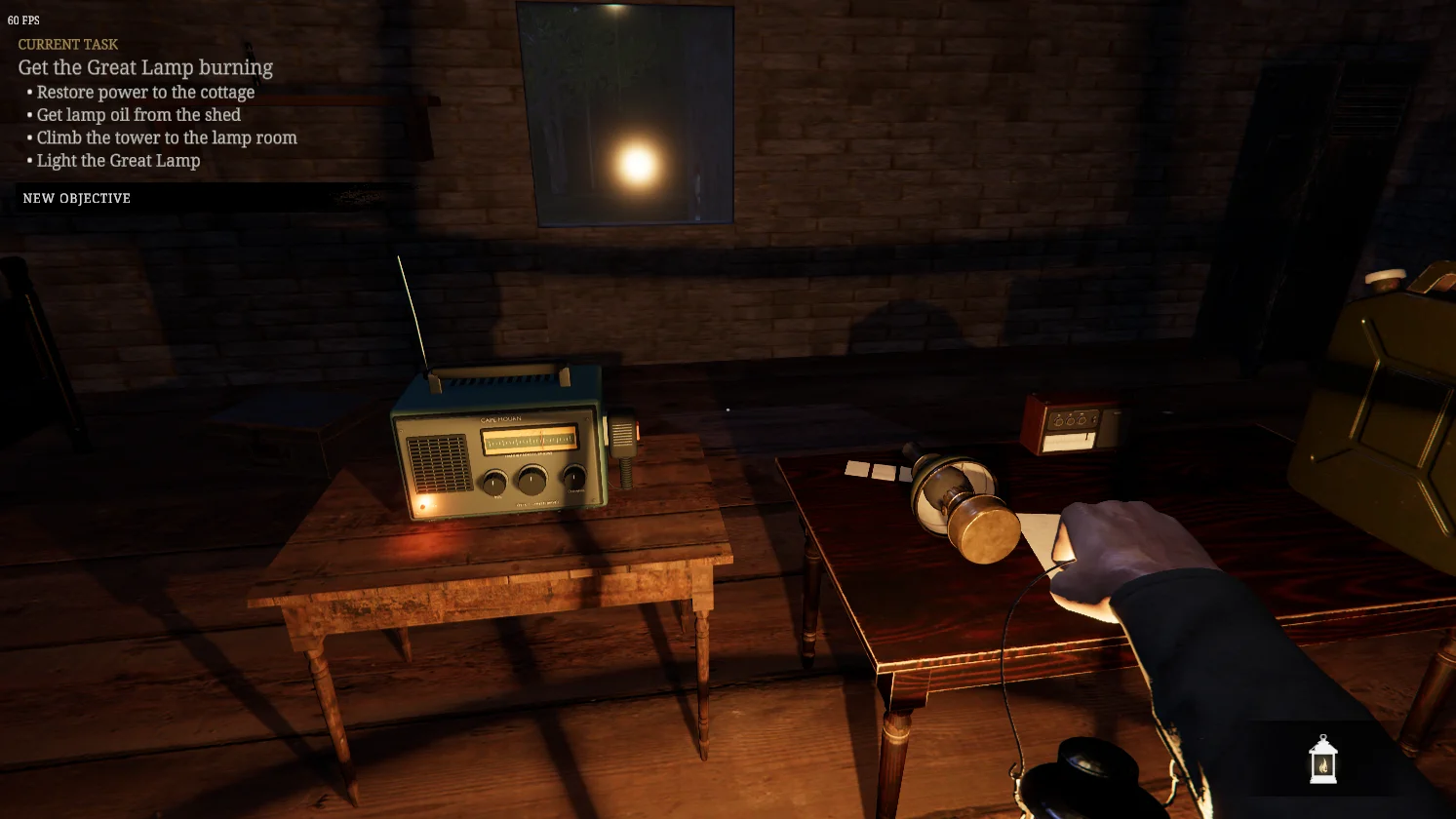
A lighthouse is a strong setting for environmental horror because it is both a shelter and a responsibility. Its rooms have practical purposes, its light reaches beyond the building, and the surrounding water limits escape. Storytelling becomes more convincing when those facts affect what players notice and do. The environment can reveal a missing person’s history while remaining a place the player must actively understand.
Lighthouse Keeper presents Cape Mourn in 1971, a relief keeper, the disappearance of Elias Vane, storm isolation, and a light holding something in the water back. The dedicated Lighthouse Keeper website supplies the project premise. This guide develops design questions from that premise rather than describing unannounced scenes or providing a walkthrough.
Give isolation a practical shape
Isolation is more persuasive when players can see why ordinary solutions are unavailable. A storm, distance from shore, or the building’s layout can establish limits. The player should understand those limits through the place rather than only through a character saying they are trapped.
Choose which ordinary tasks remain possible. Checking a room, maintaining equipment, or seeking information can give the player purposeful activity inside the constraint. These are hypothetical scene roles, not confirmed tasks in Lighthouse Keeper. Their value is that they connect atmosphere to a decision.
Avoid blocking every route in the same unexplained way. A visible environmental reason helps the player form a mental model. Some uncertainty can remain, but the space should not feel like a set of arbitrary invisible walls. The more understandable the practical situation becomes, the more an unusual change can stand out as something worth investigating.
Establish normal before changing it
An unsettling environment needs a baseline. Let players learn a few ordinary relationships: where light comes from, which sounds belong to equipment, and how rooms connect. A later inconsistency then has meaning because it differs from something they understood.
The baseline need not be completely safe. Wind and machinery can already feel uncomfortable. What matters is consistency. A player who hears a familiar sound in the wrong place can recognize a change without receiving an explicit announcement.
Introduce the building through a practical route. The player may visit spaces for a reason before those spaces carry a larger story implication. Cooperative horror sound design examines how learnable rules support uncertainty. Environmental storytelling uses the same foundation: give players enough understanding to notice when the world no longer behaves as expected.
Make rooms useful as well as evocative
A room should communicate something about its function. Equipment, storage, sleeping space, and access routes create different expectations. If every room contains only decorative clues, the building can feel like a gallery arranged for the player rather than a place someone inhabited.
Use function to organize attention. A player looking for a practical object will naturally examine some surfaces more closely than others. A clue placed there can feel discovered instead of delivered. The clue should fit the space’s history and remain legible enough to support interpretation.
Think about the route after discovery. Does the new information make the player reconsider another room, object, or sound? A clue that changes the next observation creates a stronger connection than a detached paragraph of backstory. This also helps a compact setting feel deeper without requiring a large number of additional locations.
Let clues change interpretation
Environmental clues can answer a question, create a question, or revise an earlier assumption. Plan which role each important clue serves. Several clues that all repeat the same information may add length without adding understanding.
The disappearance of a previous keeper offers a useful central question. Objects associated with routine, interrupted work, or changed behavior could support different interpretations. Those are possible storytelling approaches, not statements about the project’s actual clue inventory.
Write the player’s likely belief before and after the clue. If the belief does not change, the clue may need another purpose, such as confirming a hypothesis or pointing toward a location. Mystery progression design explores similar chains of discovery and interpretation. In horror, the chain can make an ordinary place feel increasingly uncertain while preserving a clear reason to investigate.
Connect the light to decisions
The lighthouse’s light is central to the project premise. A central object becomes more compelling when it has a readable relationship to safety, responsibility, or observation. Players need to understand enough of that relationship to care when something changes.
Communicate the current state through the environment where possible. The beam, surrounding illumination, equipment behavior, or a view of the water can support that understanding. Do not require the player to infer a critical survival state from a tiny decorative detail with no established meaning.
Preserve uncertainty about what lies beyond the light while keeping necessary actions understandable. Fear can come from the consequence the player imagines, rather than from uncertainty about which control works. This distinction allows the environment to remain threatening without making the interface itself the main obstacle. A well-established responsibility gives even a familiar maintenance action emotional weight.
Use constrained views deliberately
A narrow window, stairwell, or turning corridor limits what the player can see. That can build anticipation, but it should also support orientation. If every view is obstructed, players may spend their attention finding the route rather than interpreting the story.
Alternate constrained and informative views. A clear sightline can establish a place before the player enters a less certain section. A recognizable landmark helps them understand the relationship between floors or rooms. This makes later changes in the environment easier to notice.
Review how the player’s camera frames clues and warnings. A composition that looks excellent in a screenshot may be missed during ordinary movement. Trailer shot planning considers composed views for promotion, while gameplay needs views that remain useful when the player controls the pace. The two should show the same world without assuming the same camera behavior.
Test what players infer
During a story test, ask players what they believe happened and which observations led them there. Their explanation is more useful than a simple statement that the atmosphere was frightening. It reveals whether the clues form the intended chain or merely produce a general mood.
Record when players inspect an object, return to a room, or ignore a significant detail. A missed clue may need a better route or clearer presentation. A deliberately ambiguous clue may be working if it produces several plausible interpretations supported by evidence. Playtest feedback methods help distinguish those situations before rewriting the story.
Lighthouse Keeper is now available as a Windows download on TinyDinkler’s published itch.io page. Its project page connects that download with the official website and authentic game screenshots. Accurate presentation supports the atmosphere by making the real project clear. Within the game, the strongest environmental story gives players reasons to look, interpretations to revise, and practical decisions that connect their responsibility to the place around them.
Review one environmental clue
Choose a clue and trace the route by which the player encounters it. Identify why they look in that direction, what ordinary detail establishes context, and what interpretation the clue changes. If the route depends on the player inspecting every surface, the clue may need a stronger relationship to a practical task.
Now compare the clue with the next place it leads them to reconsider. The connection should be plausible even if it remains ambiguous. A player may form a different theory, but it should still arise from evidence in the world. This keeps the mystery open without making the story dependent on unexplained leaps. It also gives a compact environment more depth through relationships rather than through an ever-growing list of disconnected notes.