A shared boss fight promises a public moment: several players confronting one large threat together. That promise depends on more than the boss’s size. Players need to understand what they can contribute, what danger means, and whether their effort counts. An encounter can be visually dramatic while leaving newer or less powerful participants unsure why they should stay.
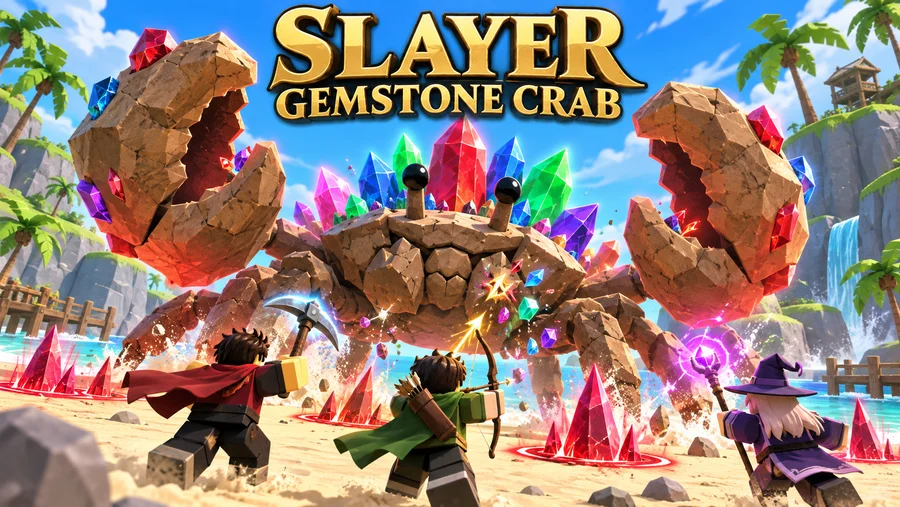
Slayer: Gemstone Crab provides a portfolio reference with a shared boss, Melee, Ranged, and Magic combat, rotating arenas, quests, and a separate PvP Brawl Cave. This article discusses design questions relevant to shared encounters. It does not claim specific reward formulas, equipment balance, or undocumented boss attacks.
Define what participation means
Before choosing a reward rule, decide which actions the encounter should value. Damage is easy to explain, but it may not capture every useful contribution. Positioning, surviving a mechanic, or supporting another player can matter in a game that actually supports those actions. Do not imply roles exist merely because they would be convenient for a reward formula.
Write the participation definition in terms players can understand. If only certain actions count, make that visible before the encounter ends. A player who spends a fight doing something apparently useful and receives no recognition has little information for the next attempt.
The reward system must also account for late arrival and interrupted participation. There may be valid reasons to set a threshold, but the player should have a way to judge whether they are contributing. Think through a newcomer, a player returning after defeat, and someone entering near the final phase. These situations expose assumptions that a full, uninterrupted test run can miss.
Give each combat approach a readable opportunity
Different combat approaches become interesting when they create different decisions. A close-range player may think about access and exposure. A ranged player may need sightlines and space. A magic system may have its own timing or resource choices. These are general possibilities; the actual rules should determine the encounter layout.
Avoid presenting one approach as a choice while making it impractical throughout the fight. Review the space and danger patterns from each available perspective. Can players see when an opportunity opens? Can they understand why an attack failed? Does a crowded arena remove the space one approach depends on?
Use the principles in multiplayer arena design to examine traffic. Although tag and boss fights have different goals, both need readable routes and recoverable positions. A boss arena should provide enough information to reposition deliberately rather than requiring every participant to remain in one indistinct cluster.
Explain danger before delivering punishment
A dangerous attack needs a cue players can connect to the outcome. The cue can be a pose, a sound, a marked area, or a change in the environment. Its purpose is to create a decision: move, wait, interrupt, or accept a risk. A cue that is technically present but hidden behind other effects may not communicate anything useful.
Test cues at the camera distances and player densities used during real play. A clear marker in an empty arena can disappear when characters and projectiles cover it. Keep important warnings visually distinct from ordinary attack decoration.
Consider whether the cue remains understandable after a player gets hit. They should be able to explain what happened, even if their reaction was late. Sound rules in cooperative horror examines the same fairness problem through audio: uncertainty can surround the situation while the relationship between warning and consequence remains learnable.
Make personal feedback survive the crowd
A shared encounter can produce so many numbers and effects that personal actions become difficult to notice. Decide which feedback must be visible to the individual. Confirming a successful hit, a changed state, or a completed objective may matter more than displaying every nearby player’s effects with equal emphasis.
Use a hierarchy. The boss’s current danger should remain readable. The player’s immediate action should receive a clear response. Decorative celebrations can occupy the remaining attention. This hierarchy helps the fight feel energetic without turning it into an unreadable wall of activity.
Review feedback during less successful play too. If a player cannot reach the boss or their attack is invalid, explain enough for them to change approach. Silence can make them repeat the same ineffective action. A concise reason, relevant indicator, or visible change in the target can help them understand the problem without stopping the fight for a large instruction screen.
Let arena changes change the encounter
Rotating arenas are useful when their spaces produce different decisions. A new backdrop alone may freshen the appearance, but route width, cover, visibility, and elevation can affect how players participate. Choose which differences matter and preserve the essential rules that players already learned.
Check each arena with the same representative situations. A close-range participant entering late, a ranged participant finding a sightline, and a defeated player returning should all have intelligible paths. A narrow arena may need different positioning guidance from a wide one.
Changing geometry also changes the cost of visual effects and movement. Review collisions, trapped positions, and places where the camera loses the warning. Solo game scope planning helps budget these dependencies. Every new arena is not merely another artwork task; it adds combinations of combat, camera, navigation, and cue visibility to test.
Separate cooperative expectations from PvP expectations
If a game includes a shared boss and a competitive area, the transition should be explicit. Players need to know whether another person is a teammate, a competitor, or simply nearby. Ambiguous boundaries can cause confusion about damage, rewards, and safe behavior.
Give each activity a clear entrance, objective, and explanation of the rules that change. This does not require a long manual. A recognizable location identity and concise transition feedback may be enough. The important point is that the player can make an informed choice to enter a different kind of encounter.
Avoid carrying reward assumptions across activities without explanation. A contribution measure useful for a boss may be inappropriate for a competitive match. The interface should communicate which progress belongs to which activity. Keeping those meanings clear also makes quests easier to understand when they send players between different parts of the game.
Review the fight through participant stories
Build a small review matrix around real situations rather than only total completion time. What does a new participant understand in the first moments? What does a returning participant see after defeat? What can an experienced player optimize? Which part of the encounter gives each person useful feedback?
Record the point at which someone stops contributing and investigate why. They may be confused, unable to find a safe position, or unsure whether their effort matters. These causes call for different changes. Playtest feedback methods help capture the observation before jumping to a larger reward or easier boss.
A strong shared encounter leaves players able to describe their role in the result. That may be a difficult survival decision, a well-timed attack, or progress toward a personal objective. The public spectacle becomes more meaningful when every participant can see how their own choices fit into it.
Review a late arrival
Enter an ongoing encounter with a player who has not seen the opening explanation. Check whether they can identify the boss’s current danger, find a useful position, and understand how participation works. A brief persistent state can be more helpful than an announcement they already missed.
Then observe their first successful action. The personal feedback should be visible amid the existing group activity. This scenario tests information that a full encounter from the beginning may not reveal. Shared fights naturally attract players at different moments, so the design should account for arrival as part of the experience.